Thanks for playing along with my little Word Tickler quiz (as seen in my glisk* 26 gone fishing). The answer key and the full answers are below. But first, a wee little rant.
I’ve always enjoyed learning new words and consider the utilization of unique vocabulary to be a sign of a writer’s integrity. While reading, I often stop to look up the meanings of words to make sure I’m catching the subtlety intended, and if a word is really great, I will jot it down for future consideration in my own writing.
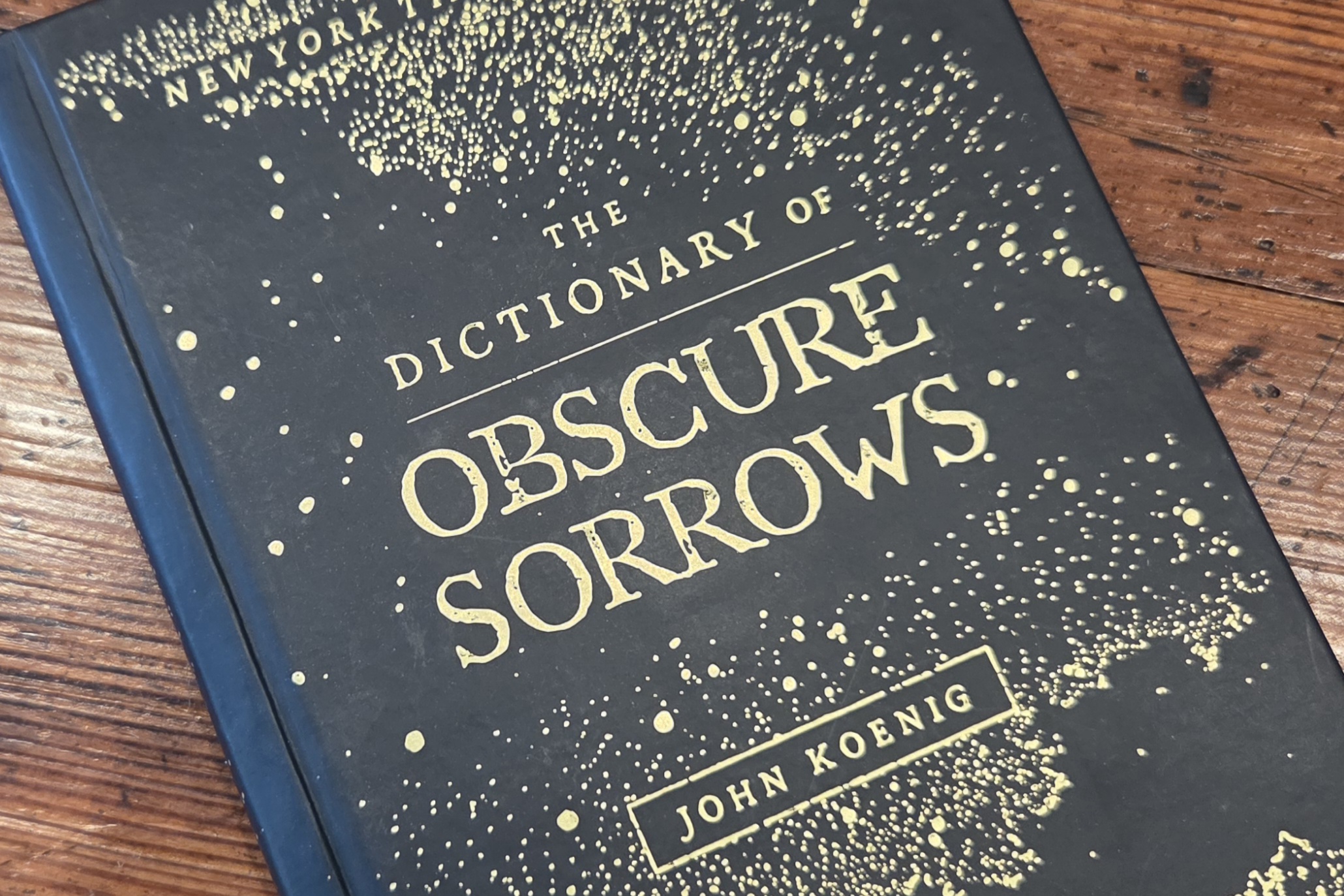
These days a select few earnest people are busy making up new words to capture the previously undefined situations or emotions we might be experiencing. Last year I bought a great book called The Dictionary of Obscure Sorrows and it is a treasure trove of harnessed introspection. A trifle on the angsty side, it has wonderful bespoke expressions for emotions you just can’t quite find the right word for. Another excellent resource is Consolations by David Whyte, a beautiful dictionary (per se) of his poetic musings on the deeper meanings behind everyday words.
At a time when the average person’s vocabulary is in significant, measurable decline, I’m all for people pondering and even creating new language. Not to be alarmist but without a course correction, in another 100 years we might be back to a caveman’s level of pointing and grunting.
I looked it up and apparently this decline in active, nuanced vocabulary is driven by four factors:
Shrinking Spoken Volume: A study conducted between 2005 and 2019 revealed a dramatic 28% drop in daily spoken volume. People speak about 338 fewer words per day each year! (And I thought it was just me with no one to talk to!!) Less verbal interaction naturally limits the active use of varied synonyms and descriptive terms.
Displacement of Reading: Reading rates for pleasure have nearly halved among younger demographics, removing a primary engine for passive and active vocabulary expansion.
Algorithmic Simplification: Online content algorithms increasingly favour simple, highly accessible language to maximize swift engagement, filtering out nuanced terminology.
Linguistic Evolution: Online communication relies heavily on extreme brevity, slang, and linguistic flexibility (e.g., using functional shifts like “verbing” nouns) to express complex ideas with smaller core vocabularies.
How achingly disappointing. Or should I say oof?
Geez I really don’t want to sound like an old guy shaking his newspaper, but… I sincerely worry about this kind of thing and believe it will increasingly be at the root of misunderstanding between folks. When all the words are gone, frustration to express yourself can easily slip to “them and us” ALL CAPS thinking. naw’mean?
Also, don’t you think it’s weird that once you learn a new word (or anything new actually), you immediately start seeing it everywhere? What is that about? This happens all the time to me, and I’ll suddenly think “Has everyone known this all along and I’m the dullest knife in the drawer?” haha. OK, just me then?
I surmise I shall presently retire from my sanctimonious perch and hone my withering intellect hither and don amongst the other pallid bibliophiles. Wilt thou joineth me?
*********************************************************
Here are the answers to the inaugural Word Tickler challenge.
Go forth in knowledge.
Answers: 1.d; 2.h; 3.e; 4.g; 5.j; 6.a; 7.i; 8.c; 9.b; 10.f
*********************************************************
RESULTS:
9+ correct Felicitations! You should immediately take Anne for a coffee to have a good long chat about all the important questions of life.
6-8 correct A valiant effort! You should call Anne immediately to discuss book and gin cocktail pairings.
4-5 correct Anne loves a challenge! Send her an email (with appropriate punctuation) and she will happily assign you some book reports to get your average up.
3 or less correct Thou mighteth be thick but Anne judgeth not. You should text her asap and she will humour you with thinly veiled jokes at your expense.
*********************************************************
FULL ANSWERS:
Apricity: the light or warmth of the sun in winter
Ouroborous: a circular symbol that depicts a snake or dragon devouring its own tail
Rubato: in music, subtle rhythmic manipulation and nuance in performance
Faran: The Old English (anglo-saxon) word for “to travel” or “to go a long distance”
Lachrymose: prone to tears, moved easily to weeping
Scaturient: overflowing, teeming, gushing forth, effusive
Catalepsis: a condition of certainty and confidence from which nothing can dislodge us
Vociferate: to shout, complain, or argue loudly or vehemently
Vernal: of, relating to, or occurring in the spring
Amelioration: the act of making something better